Make no mistake about it, there have been big improvements in recent years in food
waste
depackaging and separation equipment. The sector is transitioning away from first-generation equipment which comprised repurposed machines originally designed for msw sorting, milling, pulping paer and cardand shredding, to purpose-built models which are the result of many years of innovative design. The characteristics we looked for in the listed equipment were:
acceptance of a wide range of biowastes from ofmsw (organic fraction of municipal solid waste) to “out of specification” products from the food processing industry
off the shelf tried and tested designs rather than one-off bespoke and purpose-designed prototype equipment.
Pittsburgh tank factory-welded food waste storage tanks welded - recovered food waste storage tank welded - liquid storage tank tank connection bolted steel food waste storage tanks bolted & insulated - anaerobic digester & equalization tanks bolted - liquid storage tank scott equipment thor turbo separator de packaging organic waste for anaerobic digestion ev systems new england, llc p. O. Box 1120, easthampton, ma 01027 (413) 349-9491 // corey@ev-ne. Com manufacturer's representative for bulk material storage, handling & processing equipment and air pollution control equipment serving the northeast us:.
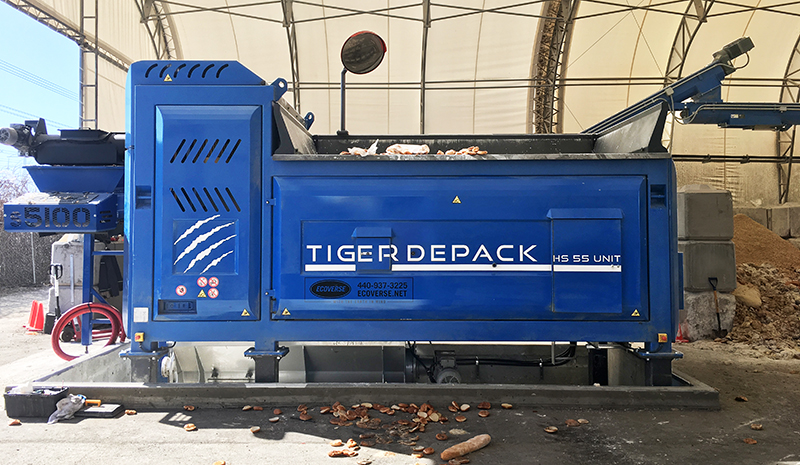
New from doppstadt us , a division of ecoverse industries, based in avon, ohio, is the tiger hs640 depackager, shredder and screener for food waste recycling and anaerobic digestion applications. The tiger hs640 offers three functions in one piece of equipment, the company says. According to ecoverse, the machine can process solid and liquid fractions, and organic wastes can be processed as they are. The company says the tiger helps to mitigate feedstock contamination because it is capable of removing organic materials, such as food waste, from packaging containers. Doppstadt says the machine is ideal for applications which require the processing of packaged organics, such as food waste.
So what is the bio-separator and how does it work? it's an innovative and robust piece of revolutionary equipment which comes in a range of sizes which effectively separates biogenic-organic material from non-biogenic waste material. These machines are the solution to a multi-million pound problem that have been causing complications for councils for decades. The bio-separator process is simple. Waste material is put into a bio-separator from a 'hopper' which breaks down the waste material. The bio-separator uses its hammer mill to break down and separate the waste. Rotating blades are then used to filter the organic waste through a screen while the non-organic waste is retained within the hammer mill.
Food Waste Depackaging Systems
Flexidry is a versatile solution developed and patented by green creative. Flexidry depackaging solution separates content from container without crushing it, regardless of the type of packaging or organic matter. By ‘unpacking’ food waste, flexidry saves precious biowaste from incineration and turn it into pure organic matter. Flexidry is the only industrial solution that guarantees a pulp purity of 99. 9%.
This results in a higher methanogenic potential for biogas production and a safe & healthy soil fertilization through quality compost or digestat.
Twister has made the first sales of its innovative food waste depackager and separator to new clients in europe and asia. The small, low-energy plastic waste reprocessing unit has broken into growing eu and asia markets. First sold in canada this spring, it offers decentralized organic processing and expels each packet opened, emptied and whole. The resulting clean food waste generated by the "twister" effect, is free of micro-plastics and ready for anaerobic digestion. "anyone familiar with the food waste depackaging market will probably have noticed how everyone else seems to start their depackaging and separation of source-separated organics by reducing the particle size.
Ecrusor™ is the ideal solution for depackaging and preparing biodegradable wastes for energy generation. Co-digestion involves commingling of sewage wastewater sludge with other high strength waste from residential, commercial and/or industrial waste and anaerobically digested to produce stabilized end product and biogas. The first step to any successful co-digestion process is to secure, receive, depackage, and pre-treat substrates that can be commingled with sewage wastewater sludge. The ecrusor process is veolia’s primary food depackaging and organics recovery process. The ecrusor process is primarily used to depackage expired products such as dairy products, meat products, confectionery industry, manufacturing residuals, bakery wastes, including uncooked and cooked dough, expired soft drinks, expired food products, waste from grocery chains, waste from cafeterias, restaurants, commercial kitchens, restaurant, household, and kitchen wastes where available and landfill diverted organics.
We load your entire lot of packaged and palleted materials into our depackaging machine which uses a high tech separation system to divide out the food materials into an organic waste holding tank and the other materials like plastics, cardboards, paper and metals (no glass allowed) is dried and separated out as well. The organic waste from the food or beverage can then be processed through our anaerobic digester partners here in washington state, or sent to our skagit soils composting partner where we make our highly sought after landscape mulches. The inorganic materials – cardboard and plastics – are sent back into the supply chain to be repurposed into a wide variety of products.
Systems In U.S. Market
Smicon manufactures depackaging machines to recycle food waste from supermarkets, restaurants, caterers, and food industry surplus. The machines open commercial packaging, liberate the contents, and grind the food waste into an organic flow free of packaging remnants. Resulting organic flow can be made into animal feed, compost, or reusable energy. Lubo non-wrapping 440 onp screen tomra optical sorting multi-mrf™ (material recycling facility) systems msw processing van dyk technology & material test center van dyk direct van dyk in the news videos.
Food Depackaging: The Systems
The presence of packaging materials in food waste feedstocks, especially those collected from food manufacturers and retailers, contaminates feedstock mainly with plastics but also with paper, card, cans and glass. This is deemed to be a particular problem for ‘wet' ad systems, where plastics materials can form a floating layer on the wet digestate. The use of depackaging equipment by in-vessel composting plants is not included in the review because it is a dryer process, where packaging can be removed after the composting process. The review was carried out by international environment consultancy, slr consulting. The company investigated the technology available through contacting members of the german biogas association and asking them for the names of their depackaging equipment suppliers and by looking into the equipment suppliers at two of europe's biggest exhibitions for waste treatment – rwm 2008 in birmingham and ifat 2008 in munich.
Depacker tecnofer can provide a one-step solution with the depackaging machine for separating the waste products from its packaging. It can be equipped with different feeding and extracting systems in function of the waste product to be depacked. The depacker is designed for separating the packaging (cardboard, plastic, aluminium) from the waste product both solid and liquid like: plastic/cartboard: snacks, biscuits, bread, pasta, candy, meat, dairy products, frozen food, cosmetics, pharmaceuticals ect. Tetra pak: cream, milk, water, wine, juices etc. Aluminuim: oil, conserves, beverages etc. Depackaging capacity up to 50 ton/h in function of the processed waste material.
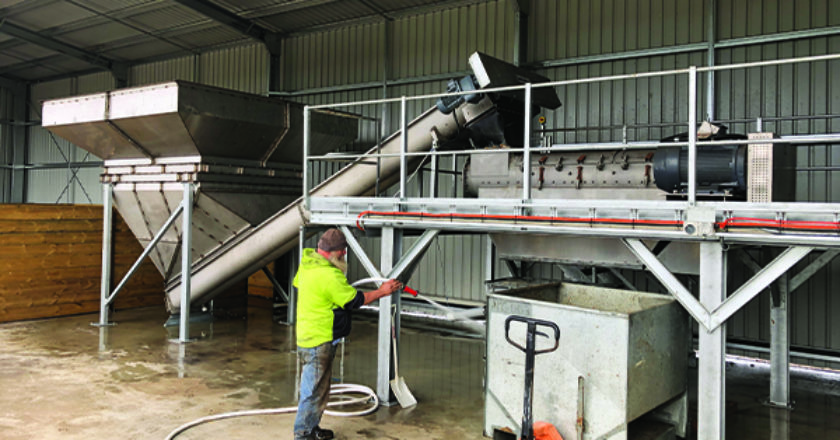
Our model t42 is the flagship of depackaging systems for pre-consumer food waste streams. It has the ability to process from 10-30 ton per hour depending on the products. The horizontal shaft has 56 flat paddles that work together to split, separate, and convey. The organics are collected and either conveyed or pumped to their holding location. The inorganics are also collected and conveyed to a roll off container or compactor.
Hundreds of pints of spoiled ben & jerry's ice cream awaited their fate in a williston warehouse this month. Unfit for sale, the sweet rejects from the company's factories would be scooped up by a worker driving a payloader and tipped with a crash into a filthy metal hopper. Augers would funnel the mess to a monstrous red machine with powerful spinning paddles that would pummel the pints, breaking down the cardboard and plastic packaging and separating most of it from the sugary slop. Welcome to vermont's first waste depackaging facility, where americone dreams go to die. Casella waste systems fired up the $3 million waste-processing plant in january and, with it, a controversy about the new type of food waste it generates.
THOR Turbo Separator by Scott Equipment Co.
"it is simple to operate. One person loads and monitors the equipment. It does not require water to process and being in california, that's important. Thousands of tons have been processed without any unplanned downtime. Thor does it all!" - uscc 2022 depackager talk chris seney vp of organics republic services "we can theoretically process 30 tons/hour of material, however the normal mix of usual products is typically from 12 tons/hour (bakery/cookies) to 20 tons/hour (canned foods, vegetables, etc. ). So on a 12 to 16 hour processing day, you could achieve rates of 250 tons/day of feedstocks. ” - oct20 biocycle john hanselman founder vanguard renewables "for operators dealing with wet material, we can fit the turbo separator with a pump that removes liquids from the recovered organic throughput,” he says.

 Instead, casella’s new innovative solution to the mandated landfill ban is a so-called depackaging facility that does the hard work automatically and separates food scraps from the plastics that package them.